
Height safety is often treated as a contractor’s problem. It shouldn’t be. By the time a roofing contractor arrives on site, many of the decisions that determine how safely people will work at height for the next 25 years have already been made, or missed, in the specification.
For architects and specifiers working to NBS conventions, embedding height safety requirements early is both a professional responsibility and a practical advantage.
The Construction (Design and Management) Regulations 2015 place a clear duty on designers to eliminate or reduce foreseeable risk during construction, maintenance, and eventual demolition. Fall from height remains the leading cause of fatal injury in UK construction, according to the Health and Safety Executive.
Addressing access and fall protection at Stages 2 or 3 means the structural engineer can accommodate loading requirements for mansafe anchors, fixed walkways, and roof-level lifeline systems before the frame is designed. Specifying these systems retrospectively almost always increases cost and sometimes compromises the integrity of the original design.
Height safety specification typically falls within NBS sections covering roof construction, metalwork, and safety equipment. The following systems warrant early consideration:
Mansafe horizontal lifeline systems are continuous cable or track systems that allow maintenance workers to traverse a roof or façade while remaining attached to a fall arrest anchor at all times. Anchor point loads must be coordinated with the structural engineer.
Fixed access walkways provide a defined, slip-resistant route across fragile or vulnerable roof surfaces. They also protect the roof membrane from foot traffic damage, which has a direct effect on maintenance costs.
Static line systems and anchor points serve as discrete, permanent attachment points for operative harnesses. Positioning should reflect the likely maintenance tasks: gutter inspection, plant access, and glazing maintenance each require different anchor locations.
Edge protection and collective fall prevention may be required during construction as well as for ongoing maintenance. Specifying proprietary parapet upstands or edge rail systems within the architectural package removes ambiguity from the tender stage.
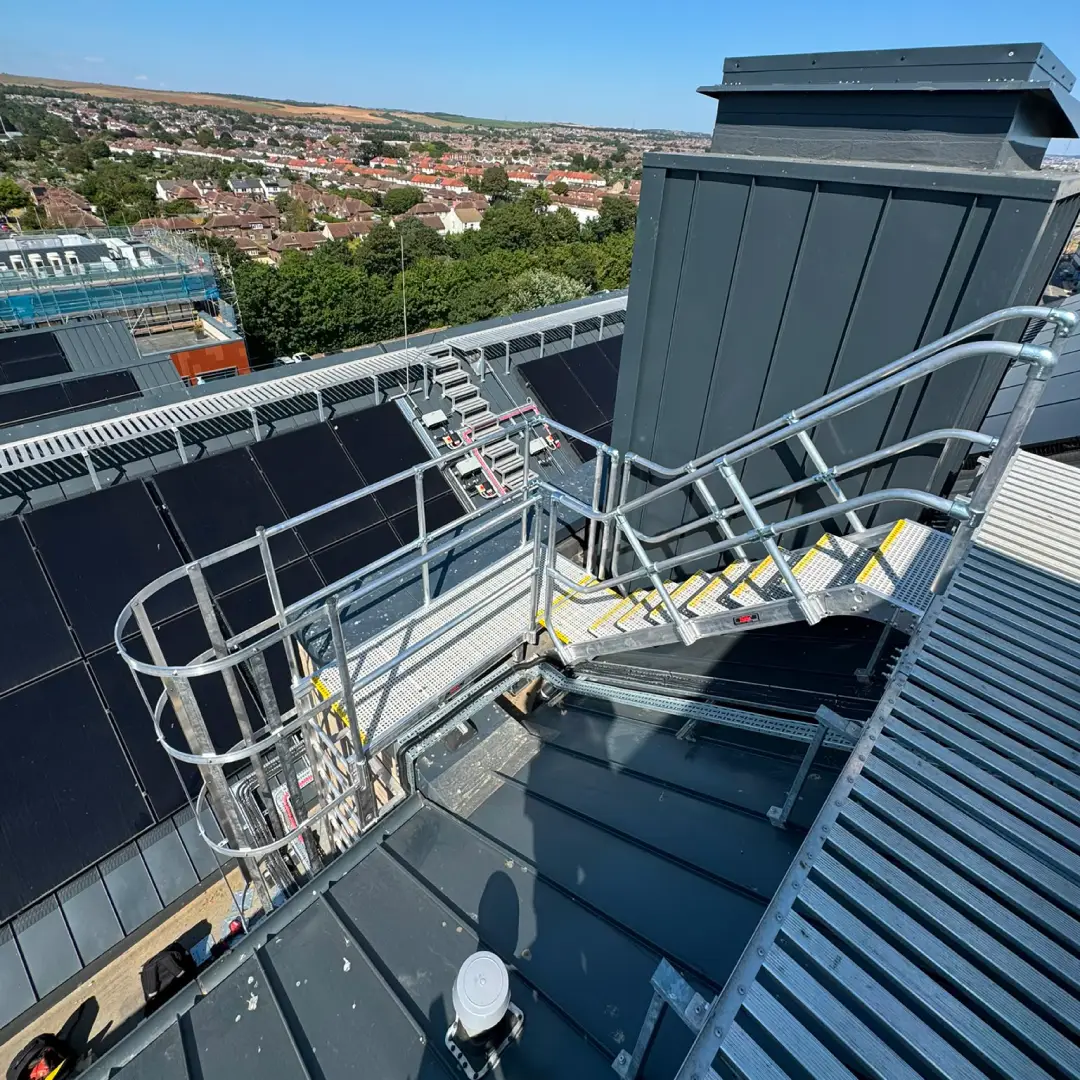
A well-structured NBS clause names the system type, references the relevant British Standard (BS EN 795 for anchor devices, BS 8560 for the design of buildings that facilitate the safe maintenance of roofs), and defines the performance requirement rather than prescribing a single manufacturer.
A performance-based approach gives contractors flexibility to tender competitively while ensuring the installed system meets the design intent. Include requirements for third-party certification, installer competency, and a commissioning inspection as part of the clause.
It is also worth specifying that the system supplier provides a maintenance log and recommended inspection intervals at handover. This supports the building owner’s ongoing duty under the Work at Height Regulations 2005 and reduces the likelihood of the system falling into disrepair between planned maintenance cycles.
Specification alone is insufficient if the information does not reach the right people at the right time. The height safety strategy should be reflected in the pre-construction Health and Safety Plan and carried through into the Health and Safety File, which the principal designer is responsible for under CDM 2015.
Coordinating with the structural engineer on anchor loads, with the roofing contractor on walkway substrate compatibility, and with the facilities management team on long-term access requirements will produce a more cohesive outcome than treating height safety as an isolated product selection.